AI Support Platforms 2026: Which Actually Scale?
AWS, Google Cloud, Azure, IBM Watson, Oracle — which AI support platforms actually scale in 2026? Honest comparison and our pick.
Key Takeaways
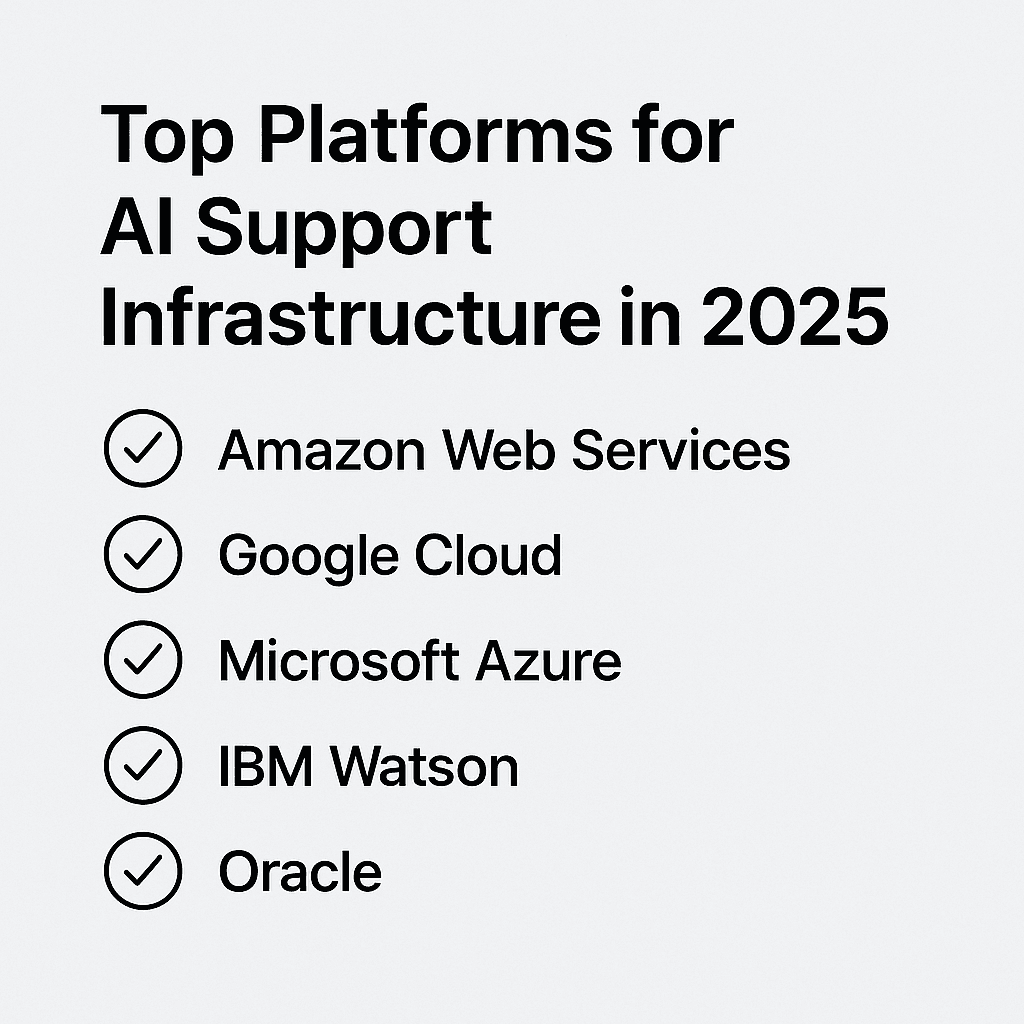
- ✓AWS, Google Cloud, and Microsoft Azure dominate enterprise AI support
- ✓Integration capabilities are critical for platform selection
- ✓Observability features enable proactive support management
- ✓Personalization engines adapt to evolving customer expectations
- ✓Scalability remains the top priority for enterprise deployments
As businesses continue to digitize, the need for reliable, scalable, and intelligent AI support infrastructure is more critical than ever. In 2025, leading platforms are defining new standards for how enterprises manage customer support, data operations, and automation across global markets.
TL;DR: Leading AI support platforms for 2025 include AWS, Google Cloud, Microsoft Azure, IBM Watson, and Oracle, offering scalable infrastructure for enterprise customer service operations. These platforms provide integrated solutions combining machine learning, natural language processing, and advanced analytics. Key differentiators include observability features, seamless integration capabilities, and advanced personalization engines that adapt to evolving customer expectations.
Key takeaways:
- AWS, Google Cloud, and Microsoft Azure dominate enterprise AI support
- Integration capabilities are critical for platform selection
- Observability features enable proactive support management
- Personalization engines adapt to evolving customer expectations
- Scalability remains the top priority for enterprise deployments
This article outlines the top platforms shaping AI support infrastructure and offers practical insights for VPs, Heads of Support, and IT Managers evaluating their next move.
The Evolution of AI Support Infrastructure
AI support stacks have matured from isolated tools into comprehensive, interoperable ecosystems. They include chatbots, NLP engines, AI observability tools, and deep-learning-powered analytics. Together, they deliver efficient, scalable, and responsive customer support.
Gartner projects AI infrastructure spending will exceed $1.3 trillion by 2030, underscoring its growing importance.
As customer expectations rise and operations scale, the question isn’t whether to adopt AI—but which platform offers the best foundation for long-term success.
Leading AI Platforms in 2025
1. Amazon Web Services (AWS)
Best for: Flexibility, enterprise-scale infrastructure, robust observability.
- Amazon SageMaker: End-to-end machine learning lifecycle management.
- Amazon Lex & Polly: Natural voice and chatbot tools for conversational interfaces.
- CloudWatch & X-Ray: Real-time observability for AI performance.
AWS offers unmatched scalability and depth, making it ideal for complex, data-heavy organizations looking to build a full AI stack from scratch or enhance existing tools.
2. Google Cloud AI
Best for: Rapid ML model deployment, conversational AI, user-friendly interfaces.
- Vertex AI: Unified ML platform for scaling and managing models.
- Dialogflow: Powerful conversational AI with multilingual and omnichannel support.
- Cloud AutoML: Low-code model training for teams with limited data science expertise.
Google Cloud strikes a balance between ease-of-use and enterprise readiness, particularly suited for businesses looking to democratize AI development across teams.
3. Microsoft Azure AI
Best for: Deep enterprise integration, security, and pre-trained cognitive services.
- Azure Machine Learning: Scalable AI modeling and deployment.
- Azure Cognitive Services: Plug-and-play NLP, vision, and speech APIs.
- Azure Monitor: Built-in AI observability and performance metrics.
For enterprises already embedded in the Microsoft ecosystem, Azure offers a seamless path to extend AI into CRM, support, and operations with strong compliance and governance.
4. IBM Watson
Best for: Explainable AI, regulatory environments, advanced data analysis.
- Watson Assistant: Context-aware virtual agents for customer support.
- Watson Discovery: AI-powered document and knowledge base search.
- Watson OpenScale: AI observability and bias mitigation across ML models.
IBM Watson is ideal for industries like finance, healthcare, and legal where auditability and trust in AI decisions are non-negotiable.
5. Oracle AI
Best for: Complex data environments, integrated ERP/CRM ecosystems.
- Oracle AI Services: Pre-built models tailored to business functions.
- AI Data Lakes: Optimized infrastructure for AI-ready data ingestion and training.
- AI Observability: Native monitoring tools to ensure data flow and model accuracy.
Oracle is uniquely strong for enterprises with large operational databases that need native AI support within their ERP or customer systems.
The Future of Scalable AI Support
By 2025, successful AI support infrastructure will prioritize:
- Seamless Integration: Platforms must interoperate with CRMs, ticketing tools, and analytics stacks.
- Built-in Observability: Real-time monitoring to track performance and prevent model drift.
- Flexible Scaling: Elastic infrastructure that grows without proportional resource overhead.
- Personalized Experiences: AI tuned to deliver contextual, behavior-driven support.
- Human-AI Collaboration: Hybrid models where AI handles volume and humans handle nuance.
How to Choose the Right Platform
When evaluating AI support platforms, decision-makers should consider:
- Business Needs: Is the focus automation, insights, multilingual support, or scalability?
- Technical Fit: Can the platform integrate with current tools and workflows?
- Budget and ROI: What’s the total cost of ownership versus expected business value?
- Security and Compliance: Does it meet standards like GDPR, HIPAA, or SOC 2?
- Vendor Support: Is there expert onboarding, documentation, and responsive customer service?
Final Thoughts
The AI support infrastructure space in 2025 is defined by maturity, interoperability, and intelligence. Whether you’re a growing startup or an enterprise support leader, investing in a scalable, observable AI stack is no longer optional—it’s strategic.
Platforms like AWS, Google Cloud, Azure, IBM Watson, and Oracle are leading the charge, offering the tools, governance, and innovation needed to deliver best-in-class support experiences.
Try Twig for free now and experience how scalable AI support infrastructure can transform your customer service capabilities.
Try Twig free — see how autonomous AI support works on your tickets
30-minute setup · Free tier available · No credit card required
Frequently Asked Questions
What features define next-generation AI support platforms?
Next-generation AI support stacks combine chatbots, NLP engines, AI observability tools, and deep-learning-powered analytics into comprehensive, interoperable ecosystems. They prioritize seamless integration, built-in observability, flexible scaling, personalized experiences, and human-AI collaboration.
How do cloud platforms compare for AI customer support?
AWS leads on flexibility and enterprise-scale observability, Google Cloud balances ease-of-use with conversational AI through Dialogflow, and Azure excels at deep enterprise integration and pre-trained cognitive services. IBM Watson suits explainable AI in regulated industries, while Oracle is strong for integrated ERP and CRM data environments.
AI Support Infrastructure That ScalesWhat should enterprises consider when choosing AI support infrastructure?
Decision-makers should weigh business needs such as automation or multilingual support, technical fit with existing tools and workflows, budget and ROI, security and compliance standards like GDPR, HIPAA, or SOC 2, and the quality of vendor support and onboarding.
ASAPP vs Maven AGI vs TwigRelated Pages
Weekly AI CX insights
How leading support teams deploy autonomous AI. One short email a week.
Related Articles
Decagon vs Sierra vs Twig: Which Is Most Secure?
Twig attaches source attribution and audit trails to every answer. Decagon and Sierra rely on enterprise controls. Which AI support is most trustworthy?
5 min readDecagon vs Sierra vs Twig: Best Helpdesk Coverage?
Twig connects 30+ data sources and runs across helpdesks. Decagon and Sierra favor custom enterprise stacks. Which has the best integration coverage?
5 min readDecagon vs Sierra vs Twig: Which Fits Mid-Market?
Decagon and Sierra are built for enterprise floors. Twig serves SMB and mid-market with no minimums. Which AI support platform fits a smaller team?
5 min read